


Keynote Speakers
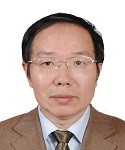
Prof. Fuan Wen
Beijing University of Posts and Telecommunications, China
Deputy Director of National Electronic Information Virtual Simulation Experiment Teaching Center,
Director of Research Center of Network Teaching System of Beijing Key Laboratory of Network System and Network Culture
Research Area:Networking and intelligence of education and teaching
Speech Title: Social science teaching based on Virtual Simulation Technology
Abstract: Many universities in China are trying to use virtual simulation technology in social science teaching to make up for the lack of practical teaching. Virtual simulation technology can provide an immersive interactive teaching environment and improve students' interest in learning. The design of virtual simulation learning system needs to pay attention to the following aspects: the design guide of teaching plan, technical quality test index, teaching implementation and excellent case introduction of virtual simulation teaching system for social science specialty. First of all, the design of virtual simulation experimental teaching resources should properly deal with the elements such as experimental subject selection, lesson period, purpose, type, name, principle, scene, operation process, teaching design and evaluation. Secondly, the technical quality of virtual simulation experiments should be controlled in the development process,including fidelity, terminal adaptability, interactivity, conception, convenience, stability,etc. Finally, some excellent cases are provided.

Prof. Wu Yanwen
Central China Normal University,China
President, Affective Computing Section, IEEE HMI
Director, Applied Research Institute of Electronics and Communication Technology
Research Area:Intelligent information system, educational technology, data mining
Speech Title: Information Education in the Age of Artificial Intelligence
Abstract:Technology is our chance to re-imagine the new form of education. Under this era background, the lecture mainly introduces how to apply new technologies and advanced teaching theory into Smart-Education, so as to achieve its high value realization. AI can be a good helper for Smart-Education by adopting in the teaching environment, teaching target, teaching models, teaching equipment and platforms, etc. The key technologies involved AI-dual-teacher, brain computer interface, XR and digital twins, etc., which highly integrated with the knowledge background of computer science, educational technology, cognitive psychology and other disciplines. The integration and application of these new technologies in the educational scene has innovated the concept and method of modern teaching, and the application of AI will give a strong boost to IT-driven education, the delivery of education services, and capacity-building for education management. Gradually, these points merge together and push the education towards a more intelligent, human-oriented and individualized education.
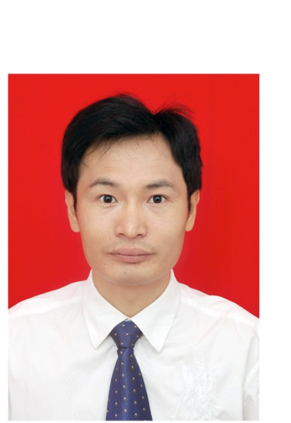
A.Prof. Yunwu Wang
Jiangsu Normal University,China
Deputy director of Educational Informatization Engineering Technology Research Center of Jiangsu Province
Research Area:education informatization, wisdom campus, strategic planning, educational robot, learning science and technology, creativity training
Speech Title: Wisdom Education: The Sixth Educational Revolution in the History of Human Education
Abstract: The history of human education has experienced five educational revolutions: body education, language education, character education, electronic education and information education. Now it is moving towards the sixth educational revolution - wisdom education / intelligent education. 5G, F5G, AIoT, AI, big data, robots and other intelligent technologies are the technological driving forces of the sixth education revolution. With the sixth education revolution coming, human education is facing important opportunities and challenges. The "14th five year plan" needs to write a new chapter of wisdom education.

A.Prof. Tomozii Elena Simona
Guangdong University of Foreign Studies,China
The Founder and Chairman of Ningbo Empower Cultural Exchange
Head of Operations and Legal
Representative in China of I.S.P.E.F. (Institute for Psychological Sciences of Education and Training) –Established China Branch
Research Area:Educational Reform and Change Management / General Management / Entrepreneurship
Speech Title: Social cohesion and wellbeing as key indicators to manage the educational reform. Applying SPIRAL Methodology of Council of Europe to promote reform in education
Abstract: There is no longer a secret the educational system is no longer serving the needs of our society. It was rather created for the industrialized society, while we found ourselves in the era of high tech. Multiple researches indicate we need to implement more consistent reforms to capacitate the educational system. Though several transitions were made, moving from a knowledge based education towards a competence based education there is not enough coherent movement.
I would like to introduce a very comprehensive tool, that allows to investigate needs and promote reform in a consistent manner, which would work both at macro level (country / region level) as well as at micro level – (school and local community level).
S.P.I.R.A.L. (Societal Progress Indications and Co-responsibility for all) is a working methodology that was created by dr. Samuel Thirion the previous administrator of the Social Cohesion Department at Council of Europe. It was successfully implemented by the Council of Europe and European Commission in several of their direction meant to reduce the effects of the economic crisis we faced in Europe between 2008 to 2012.Currently through the methodology there were established over 400 territories of co-responsibility around the world, from informal groups, organizations to the city level.
The very same methodology could prove its’self an efficient tool to introduce educational reform elements at macro and micro level.
The adaptation of the method was done by mine in an extensive study that proved it’s efficient. During my speech I would like to introduce the steps needed to be handled for the methodology to all an efficient management of the reform and of the change process in school and local communities.